

Mandi Knowles, RDN · Senior Director of Research & Development, Wellina
Published: September 1, 2026 · Last reviewed: September 18, 2026
Ozempic®* became shorthand for weight loss medication, driven largely by social media. It's still widely prescribed — but the landscape around it has changed considerably, and it's no longer the only or obvious choice.
If you're wondering whether it's right for you, it helps to understand what the medication actually is, how it works, and where it now sits among the options.
What is Ozempic®?
Despite its popularity, Ozempic® has been around for a while, and it's not technically a weight loss drug.
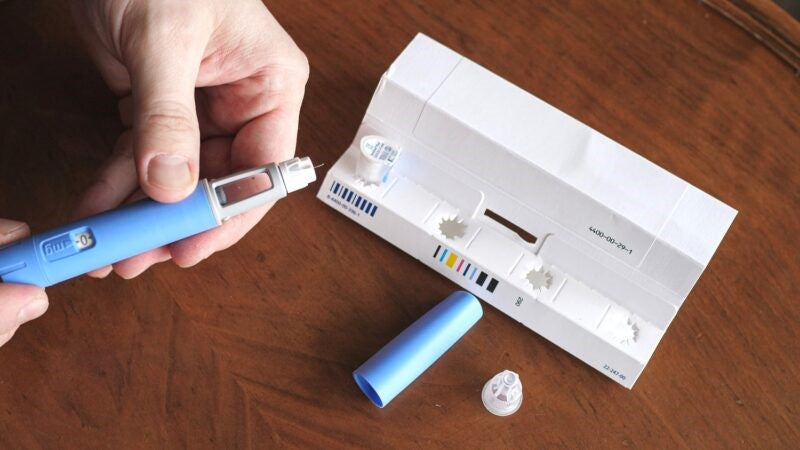
Available by prescription only, it's a self-injectable medication taken once weekly to help adults with type 2 diabetes manage their blood sugar. It's also approved to reduce the risk of major cardiovascular events, and to slow kidney disease progression, in adults with type 2 diabetes.
Weight loss is a well-documented effect of taking it, but the FDA has not approved Ozempic® for weight management, and that isn't expected to change. Novo Nordisk pursued a separate approval instead: the same active ingredient, semaglutide, at a higher dose, approved for chronic weight management in 2021 under the brand name Wegovy®*. Ozempic® tops out at 2 mg weekly while Wegovy® goes to 2.4 mg, and the trials supporting the weight-loss approval were run at that higher dose. The FDA approves drugs by indication and dose, not by molecule. Providers may still prescribe Ozempic® off-label for weight loss, which is legal and common across medicine — but it means the prescription sits outside the approved use.
How does Ozempic® work for weight loss?
Semaglutide belongs to a class of medications called GLP-1 receptor agonists. They mimic a hormone your body produces naturally after eating.
That hormone does several things at once. It signals to your brain that you're full, slows the rate at which food leaves your stomach, and prompts the pancreas to release insulin when blood sugar rises. The combined effect is that you feel satisfied sooner, stay satisfied longer, and think about food less.
Weight loss follows from eating less — not from any change in how your body burns energy.
How much weight can you lose with Ozempic®?
So how much can you actually lose? In the largest trial of semaglutide for weight management, participants lost an average of about 15% of their body weight over 68 weeks — roughly 34 pounds — alongside a reduced-calorie diet and increased physical activity.
Averaged out, that's a little under half a pound a week. But the loss isn't steady: it tends to be faster in the first several months while the dose is increasing, then slows as your weight settles at a new level.
One thing to keep in mind as you read these numbers: the strongest weight-loss evidence comes from trials of semaglutide at the higher 2.4 mg dose approved as Wegovy®, rather than at Ozempic® dosing.
In that trial — STEP 1 — participants taking weekly semaglutide lost 14.9% of their body weight, compared with 2.4% for those on a placebo. Both groups followed the same diet and exercise program, which is what makes the gap meaningful.
A much smaller study looked at how that happens. Over 12 weeks, 30 participants taking a lower 1 mg weekly dose ate about 24% fewer calories across the day, reported less hunger and fewer food cravings, and lost an average of 11 pounds. It's a small trial, but it shows the mechanism clearly: the weight comes off because appetite drops, not because the medication changes how you burn energy.
Results outside trial conditions look broadly similar. In a real-world study of patients prescribed 1.7 to 2.4 mg weekly, average weight loss was 5.9% at three months and 10.9% at six. Patients with type 2 diabetes lost less than those without — about 7.2% versus 11.8% at six months.
Does that mean an injection alone will melt pounds away? No. But for some people it makes a meaningful difference alongside a healthy diet and regular activity.
You may need to take it long term
Most weight loss interventions require sustained effort to maintain results, and Ozempic® is no exception. When people stop taking semaglutide, weight regain is common. In a follow-up to the STEP 1 trial, participants who stopped both the medication and their structured lifestyle program regained about two-thirds of the weight they had lost over the following year — though they remained roughly 5% below where they started.
That pattern reflects how the medication works. GLP-1s reduce appetite while you're taking them, but they don't build the eating habits that hold weight steady afterward. The nutrition and activity changes you make alongside the medication are what carry the results forward.
So it's worth thinking about what happens next before you start: whether you're prepared to take a weekly injection long term, and what your plan looks like if you stop.
How to get the most out of it
Reduced appetite is the medication's mechanism, and it's also its main nutritional risk. When you're eating substantially less, what you do eat has to work harder.
The priorities are protein and fiber. Protein protects muscle while you lose weight — lean mass typically accounts for a meaningful share of total loss on these medications, and adequate protein plus resistance training is what limits it. Fiber helps with the constipation that affects many people on GLP-1s, and supports fullness between meals.
Our guide to eating well on a GLP-1 covers the expert guidelines in detail, including specific protein targets and what to eat when nausea makes food unappealing.
For meals built around those priorities, our GLP-1 support range is high in protein and a good source of fiber, in portions designed for a smaller appetite.
Is Ozempic® right for you?
That's a conversation for you and your doctor, but a few things shape the answer.
Ozempic® is approved for adults with type 2 diabetes. If you don't have type 2 diabetes and you're seeking a medication for weight loss, there are now options approved for exactly that — which is usually a better route than an off-label prescription.
It isn't appropriate for everyone. People with a personal or family history of medullary thyroid carcinoma or multiple endocrine neoplasia syndrome type 2 shouldn't take it, and anyone with a history of pancreatitis, gallbladder disease, or diabetic retinopathy needs a careful conversation with their prescriber. It's not recommended during pregnancy.
Cost and coverage matter too. Insurance coverage for weight management differs sharply from coverage for diabetes, and out-of-pocket costs vary widely.
What else is available now
Ozempic® is no longer the default. For weight management specifically, the FDA-approved options are Wegovy® (semaglutide) and Zepbound®* (tirzepatide), with a higher-dose Wegovy HD at 7.2 mg weekly approved in March 2026, and an oral semaglutide tablet launched in January 2026 for people who would rather not inject. Mounjaro®* and Ozempic® remain approved for type 2 diabetes and are still used off-label for weight loss.
What about compounded semaglutide?
During the semaglutide shortage, many compounding pharmacies and telehealth companies offered lower-cost versions. The FDA declared that shortage resolved in February 2025, which closed the legal exemption most of that compounding relied on, and enforcement has tightened considerably since. If you're currently taking a compounded version, it's worth asking your prescriber whether it's still an appropriate option and what your alternatives are.
Side effects
Gastrointestinal side effects are common — close to three-quarters of people in clinical trials experienced at least one. Nausea, vomiting, diarrhea, constipation and abdominal pain are the most frequently reported, and they're usually worst in the weeks following a dose increase.
Most people find these ease over time. Eating smaller amounts more often, avoiding fried and high-fat foods, and staying hydrated all help.
More serious risks include pancreatitis, gallbladder problems, kidney injury from dehydration, and changes in vision in people with diabetic retinopathy. Any persistent or severe symptom warrants a call to your prescriber rather than waiting it out.
Frequently asked questions
Is Ozempic® approved for weight loss?
No. Ozempic® is approved for type 2 diabetes, and for reducing cardiovascular and kidney risk in adults with type 2 diabetes. Semaglutide is approved for chronic weight management under the brand name Wegovy®, at a higher dose.
What's the difference between Ozempic® and Wegovy®?
Both contain semaglutide. Ozempic® is dosed up to 2 mg weekly and approved for type 2 diabetes; Wegovy® is dosed up to 2.4 mg weekly and approved for chronic weight management. The weight-loss trial evidence comes from the higher dose.
How much weight can you lose on semaglutide?
In the largest trial, participants lost an average of 14.9% of their body weight over 68 weeks at the 2.4 mg dose, compared with 2.4% on placebo. Real-world results have averaged closer to 11% at six months.
Will I regain the weight if I stop?
Often, yes. In a follow-up to that trial, participants regained about two-thirds of the weight they'd lost within a year of stopping, though they remained around 5% below their starting weight.
What should I eat while taking Ozempic®?
Prioritize protein and fiber, eat smaller amounts more frequently, and stay well hydrated. With a reduced appetite, the nutritional quality of what you do eat matters more than usual.
Does Ozempic® cause muscle loss?
Some muscle loss accompanies any weight loss. Adequate protein intake and resistance training two to three times a week are what limit how much of your loss comes from muscle rather than fat.
The bottom line
Ozempic® can produce substantial weight loss, but it isn't approved for that use, it isn't the only option anymore, and it doesn't work in isolation. The people who do best pair it with the nutrition and activity habits that hold results in place — because those are what remain when the prescription ends.
About the author
Mandi Knowles is a Registered Dietitian Nutritionist and Senior Director of Research & Development at Nutrisystem, where she leads nutrition standards across the Wellina, Nutrisystem and Jenny Craig brands.
This article is for general information and is not medical advice. Talk to your doctor before starting, stopping, or changing any medication.
References
Wilding JPH, Batterham RL, Calanna S, et al. Once-Weekly Semaglutide in Adults with Overweight or Obesity. N Engl J Med. 2021;384(11):989–1002. doi:10.1056/NEJMoa2032183
Wilding JPH, Batterham RL, Davies M, et al. Weight regain and cardiometabolic effects after withdrawal of semaglutide: The STEP 1 trial extension. Diabetes Obes Metab. 2022;24(8):1553–1564. doi:10.1111/dom.14725
Blundell J, Finlayson G, Axelsen M, et al. Effects of once-weekly semaglutide on appetite, energy intake, control of eating, food preference and body weight in subjects with obesity. Diabetes Obes Metab. 2017;19(9):1242–1251. doi:10.1111/dom.12932
Ghusn W, De la Rosa A, Sacoto D, et al. Weight Loss Outcomes Associated With Semaglutide Treatment for Patients With Overweight or Obesity. JAMA Netw Open. 2022;5(9):e2231982. doi:10.1001/jamanetworkopen.2022.31982
*Ozempic® and Wegovy® are trademarks of Novo Nordisk A/S. Zepbound® and Mounjaro® are trademarks of Eli Lilly and Company. Neither company is affiliated with Wellina®.


